
Check the White County Current Owner Record
Ownership in White County starts with the last certified tax roll. It does not start with a phone directory or with whoever lives on the land. The county's official doorway to qPublic is the Property Record Card Search. Read the owner field exactly as written. Two owners, a trust label, or an entity suffix all matter. Pair the name with the parcel ID, legal description, situs address, mailing address, tax year, and deed reference. That way the record hangs together. The Assessor builds ownership from recorded deeds, yet the card is still a tax record. Treat it as evidence, not as a title opinion.
| Owner of record | The name or names carried on the certified assessment roll |
|---|---|
| Entity or capacity | An LLC, corporation, trustee, estate, or individual designation shown by the source |
| Mailing address | The destination for assessment and tax correspondence, which may be outside White County |
| Situs address | The physical property address, when the official card assigns one |
| Parcel and deed references | The identifiers used to cross-check the land and latest recording |
| Record date | The tax year or certification date that explains how fresh the display is |
Whoever receives mail at the situs is not automatically the White County current owner. A mailing address may belong to a trustee or an entity. It often differs from the land's own address. Keep both fields separate. The official card page displays the county's launch screen and its warning about last-certified information. That limitation is worth noting with any result you save. Open the official property-card entry before trusting a copied card.
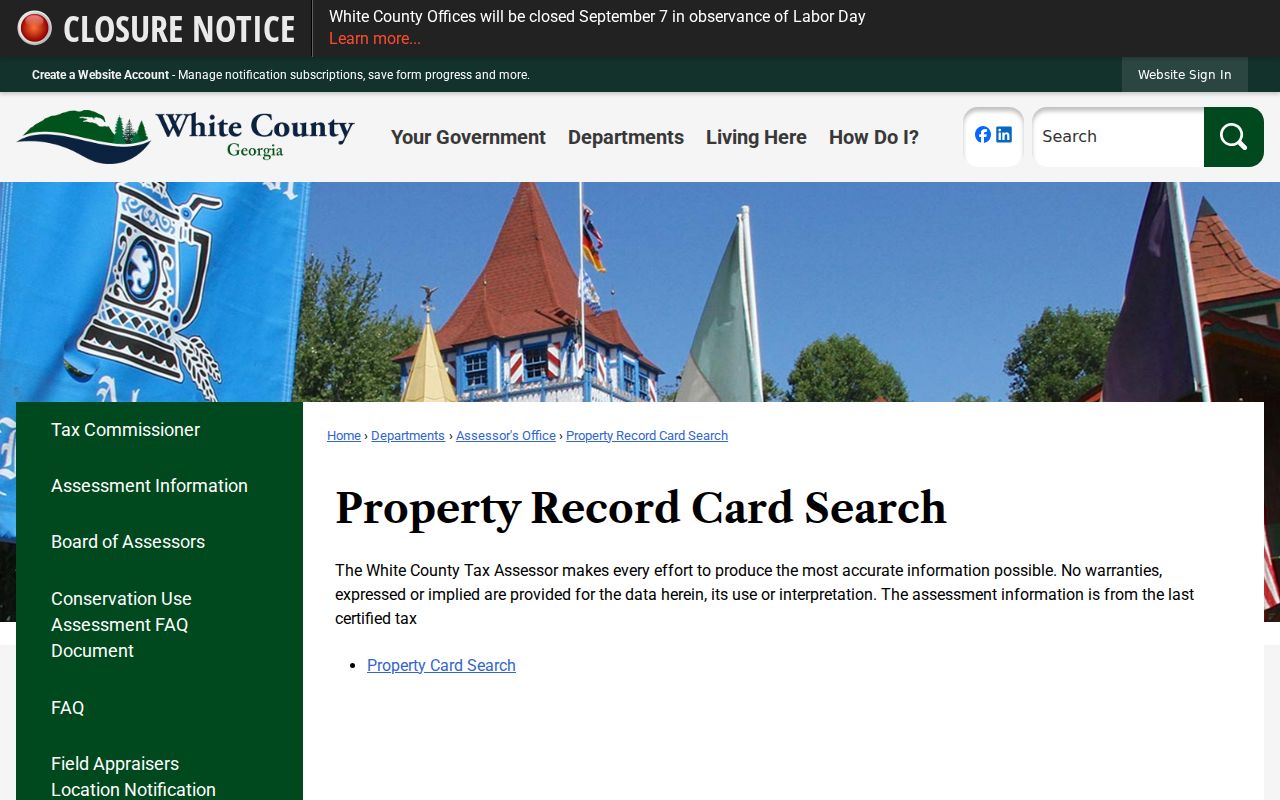
The county page remains the official route even when qPublic throws up a security challenge. If a card will not open, contact the Assessors Office rather than borrowing field names or ownership data from another county's system.
Separate a Mailing Address from the White County Situs
The situs tells you where the parcel physically sits. The mailing address tells the tax office where to send correspondence. An out-of-county mailing address proves nothing about absentee use. Identical addresses prove nothing about occupancy. E-911 numbering follows its own logic, too. White County Building Permits requires a parcel or tax-map number, a recorded plat, directions, and a valid permit before it issues a new E-911 address. An address can therefore postdate a deed's legal description.
For a stubborn address, search by parcel ID instead. Compare the legal description against the road name, land lot, district, subdivision, and plat reference. A Cleveland or Helen postal name does not settle municipal jurisdiction on its own. The 2025 Helen boundary correction shows why a current boundary layer may need its own check. Keep that check separate from the owner and mailing fields.
Verify White County Ownership Against the Newest Deed
A new sale can hit the Clerk's system early. The next certified assessor roll may catch up much later. White County publishes no dependable deed-to-roll update schedule, so avoid promising a number of days. Start from the card's certification date. Then search the GSCCCA real-estate deed index for anything recorded later. Select White County and compare the grantee, recording date, instrument type, book and page or instrument number, and legal description.
Execution and recording dates serve different purposes. A signed deed can be delivered early and recorded late. Keep both dates. Identify the latest recorded instrument that actually conveys the parcel in question. Nearby security deeds, releases, assignments, liens, and corrective documents can clutter the index. They do not move current ownership at all.
Read LLC, Trust, and Estate Names Without Guessing
When the owner field names an LLC or corporation, copy the legal name and suffix exactly. Then run the Georgia Secretary of State business search to check the entity's status. This lookup also shows the registered agent. Remember that a registered agent is a service contact. That contact is not automatically an owner, manager, or someone authorized to sell the land. Any statement about capacity needs support from the deed and the entity filings.
Trusts and estates deserve the same care. The assessor display may abbreviate a trustee's role. The deed, probate order, or executor's deed carries the operative language. Do not expand initials or guess at beneficiaries. For an estate change, obtain the recorded conveyance. When needed, get the White County Probate Court file establishing fiduciary authority.
Confirm Who Owns White County Property Now
A defensible current-owner check records what each official source says and when it said it. It never quietly turns the tax roll into a title search.
- Open White County Property Record Card Search and save the exact owner, parcel ID, legal description, mailing and situs addresses, tax year, and source disclaimer.
- Search GSCCCA for the latest White County deed affecting that legal description, then compare grantee and deed references with the card.
- Check an entity's official Secretary of State filing or a trustee's or executor's source document without treating an agent as the owner.
- Note any newer recording, correction deed, parcel split, or jurisdiction change that the certified roll may not yet reflect.
- Owner of record
- The party named on the relevant official roll or recorded instrument.
- Vesting
- The deed language showing who received an interest and in what stated capacity.
- Tenancy
- The form in which multiple parties hold title, only when the deed expressly establishes it.
- Registered agent
- The official contact for service on an entity, not proof of personal ownership.
Use Every White County Access Channel
Online tools are only one route. The Assessors Office sits at 1241 Helen Highway, Suite 180, in Cleveland. It takes questions at 706-865-5328 or assessor@whitecountyga.gov. Ask for the parcel card and name the parcel, address, owner spelling, and tax year. County Mapping & GIS notes that qPublic hosts the parcel maps and assessment data. The Map Gallery carries planning and environmental layers.
For deed confirmation, the White County Clerk of Court Recording Division provides copies in person or by mail. Supply a book and page or a party name with an approximate date, pay in advance, and enclose a self-addressed stamped envelope for mail requests. GSCCCA eCert handles regular and certified copies electronically. Note: the county's general Open Records form excludes Clerk real-estate records, so send deed requests straight to the Clerk.
Keep Tax, Sale, and Ownership Dates Distinct
The Assessor's digest, the Tax Commissioner's bill, and the Clerk's recorded deeds each answer a different ownership question. The digest shows an owner for a given year. It also lists fair-market and assessed values, exemptions, and taxes. A deed is different. It may show recorded consideration and a later grantee. A last sale amount or a tax mailing name is not proof of current title. Resist that shortcut. The deed's vesting language alone controls who owns the parcel now.
White County publishes tax digest files with five-year histories spanning 2016 through 2026. Those annual files help you spot the year a name or value shifted. They cannot fix an exact closing date. Go back to the deed for that. A parcel may have been split or combined. Trace parent and child parcel identifiers. Compare the legal descriptions too. Only then can you be sure two records describe the same land.
Keep an evidence record, not just a conclusion. Log the owner's exact spelling and capacity. Note the parcel ID, deed reference, recording date, tax year, market and assessed fields, map date, and source URLs. What if sources disagree on the current owner? Report the dated difference plainly. A later recorded deed may explain it. A correction may show the change is not a change in ownership at all. So might a security instrument or a similarly named parcel.
Contact a White County Property Owner Lawfully
The mailing address on the official tax record is the most direct clue for lawful property correspondence. It is not permission to intrude. Send a limited message tied to the parcel. Include the parcel ID and your purpose stated plainly. Do not publish personal identifiers. Do not infer private residence, family relationships, or protected details from unrelated sources. Georgia VoteSafe shields qualifying voter-address information. Combining databases to defeat that protection is never acceptable.
Owner of record is not occupant. Use White County owner information for legitimate boundary, purchase, estate, tax, or property-history questions. Never use it to watch, threaten, harass, or harm a person, and confirm any ownership conclusion with the responsible custodian.