
Read White County Deed Records by Instrument Type
The White County Clerk of Court, Recording Division, keeps the deed records. That office is where documents enter the public record, and each one names the parties, describes the land, and fixes its filing date. It can also point elsewhere. Look for references to an earlier deed. Corrections, assignments, cancellations, and releases surface the same way. Start with the instrument type most likely to answer your question, then compare its parties and land description against the parcel record before trusting the link.
| Deed Type | What It Does | Common Use |
|---|---|---|
| Warranty deed | Conveys the interest with warranties stated in the instrument | Ordinary sale or family conveyance |
| Quitclaim deed | Conveys whatever interest the grantor holds | Family transfer or clearing a possible claim |
| Security deed | Records Georgia real-property security for a debt | Financing, later assignment, or release research |
| Executor or representative deed | Documents an estate-related conveyance | Probate sale or distribution |
| Correction deed | Corrects an earlier recorded instrument | Name, execution, or description correction |
A deed is not an encumbrance. Deeds convey the interest they describe. Security deeds, liens, easements, covenants, and UCC-related instruments can burden or affect land without marking any change in ownership. Read the image, not just the index label.
Enter White County in the Statewide Deed Index
The GSCCCA real-estate index is the natural online starting point for White County deed records. Pick White County first. Then read what comes back with care. A grantee search shows when a party received an interest. A grantor search shows when that party conveyed one. Statewide coverage claims do not guarantee that every White County entry and image is complete for the same dates. The GSCCCA party-name screen adds party type, instrument type, county, name, date, and display controls. Those controls help narrow results.
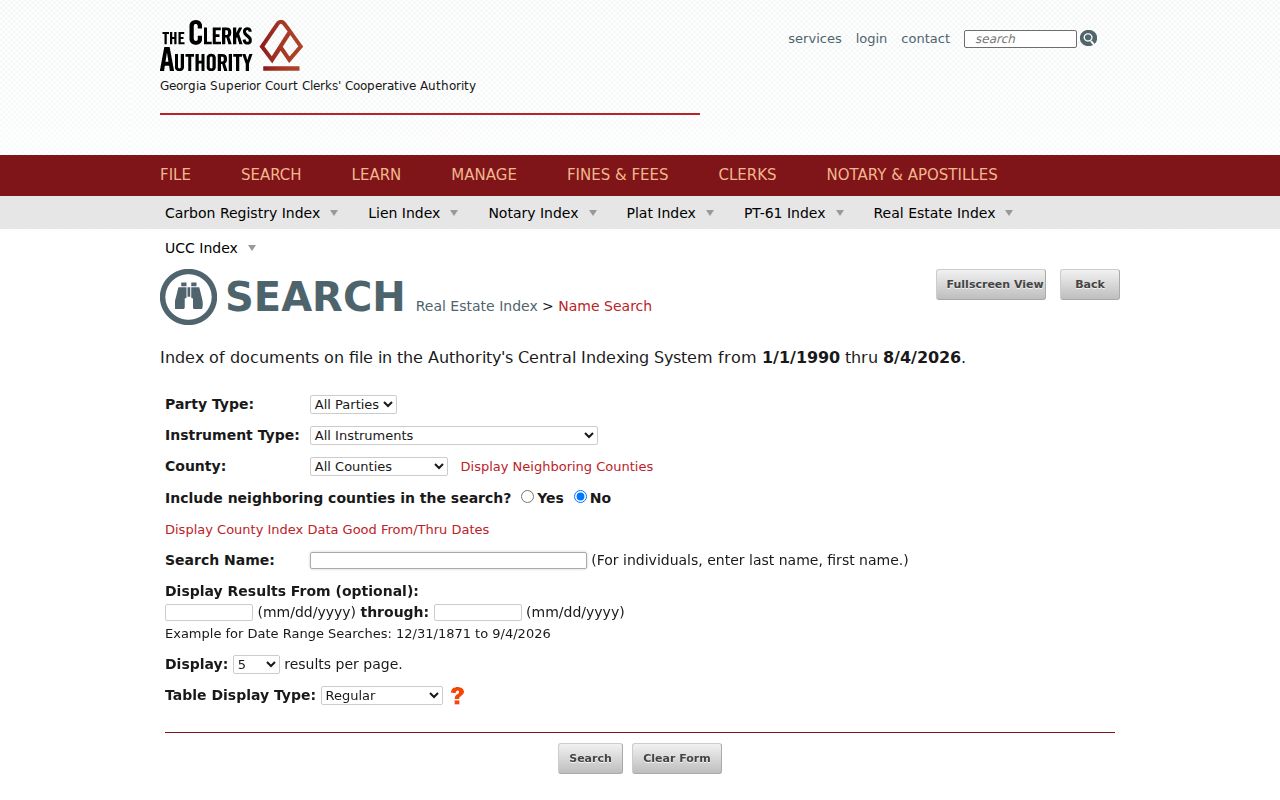
Set a wide date range at first. Keep the indexed spelling exactly as it appears, and narrow by instrument type only when the result set demands it.
Record the Fields That Keep a Deed Trail Together
| Index field | Purpose | Research habit |
|---|---|---|
| Party type | Separates grantor from grantee | Write down the party's role in every transfer |
| Instrument type | Distinguishes deeds, security deeds, releases, and corrections | Preserve the exact label |
| Name and date | Finds a party in a likely period | Try initials and entity punctuation variants |
| Book/page | Targets a known recording citation | Copy the reference exactly |
| Legal description | Connects the instrument to the land | Compare lot, block, land lot, district, acreage, and plat |
A shared surname is not a link. Tie instruments together through the land description and the cited prior deed, especially when one owner held several White County parcels.
Build the White County Grantor-Grantee Chain
A grantor conveys the interest a deed states. The grantee receives it. A chain of title is the linked sequence of conveyances for one piece of land, so keep names attached to descriptions, dates, and recording references throughout the search.
- Find the latest plausible acquisition deed and verify that its description matches the parcel.
- Record the grantee, grantor, deed type, date, and book/page or instrument number.
- Search that grantor as an earlier grantee to locate the preceding acquisition.
- Repeat backward, flagging corrections, quitclaims, estate transfers, splits, and unexplained gaps.
- Grantor
- The party conveying the stated interest.
- Grantee
- The party receiving the stated interest.
- Chain of title
- The ordered sequence of instruments tied to the same land.
- Book/Page vs Instrument #
- Two recording references used to identify a filed document.
Use Book and Page When Names Become Noisy
A book and page citation beats another name query. Pull it from a parcel card, deed, plat, or court file, then enter it in the GSCCCA book/page search along with the county.
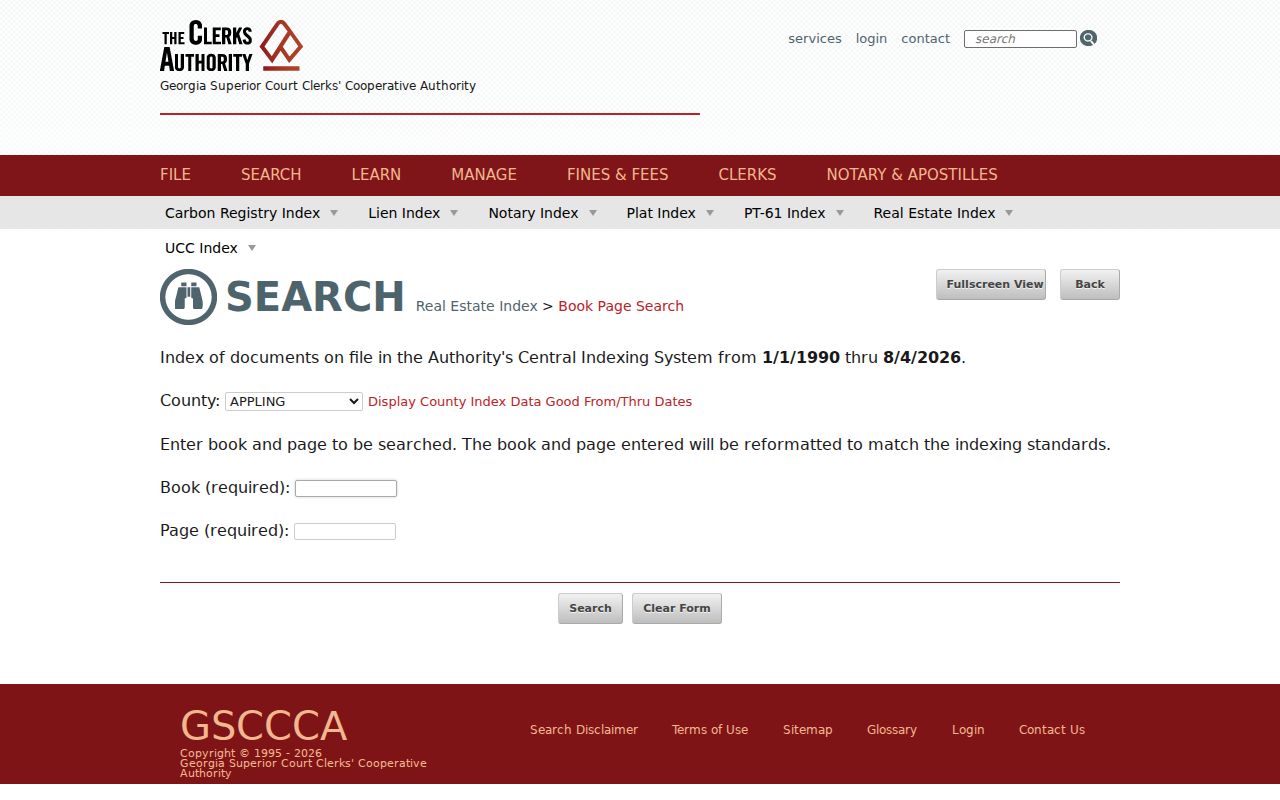
Go straight to the book and page numbers when White County names grow too common to sort out.
Let Recorded Plats Explain White County Parcel Splits
When acreage, road names, or lot numbers shift, pair the deeds with a recorded plat. White County Planning reviews subdivision streets, block and lot sizes, and utilities. But Planning does not record plats. The Clerk does. Search the plat index by subdivision, party, district, land lot, and related clues. Then compare the final recording with the parent deed.
Planning records are leads, not proof of completion. A 2025 board document described Hunt's Ridge as 54.77 acres. It noted 47 lots off Claude Sims Road. Mountain Shadows Unit II cited Plat Book 28, Page 265. It listed six map parcels. Preserve the project phase and approval date before chasing later child-parcel deeds.
Get a White County Deed Online, at the Counter, or by Mail
An online GSCCCA image or GSCCCA eCert copy covers many needs. Others can visit the Recording Division. It sits at 59 South Main Street, Suite B, in Cleveland, open Monday through Friday from 8:30 a.m. to 5:00 p.m. Deed and plat questions go to 706-865-2613, extension 325. Mail requests work too, but they need book and page or party-and-date details, advance payment, and a self-addressed stamped envelope.
Copies run 50 cents per page unassisted. Court-assisted copies cost $1 per page, and certified copies run $2.50 plus 50 cents for each additional page. Confirm the current schedule before paying. The office does not supply deed forms. A transfer needs a new properly executed deed and an electronic PT-61 filing.
Recorded, not guaranteed. White County deed records show what entered the public record. They do not prove the grantor held good title, reveal every unrecorded interest, or supply a title opinion.
Cross-Check Security Deeds, Liens, and Releases
Names can linger without a new sale. Financing records often explain why. Follow a security deed through assignments, transfers, cancellations, and releases, and let the Clerk's pointers to the GSCCCA lien and UCC systems fill out the picture. Check every hit closely. Confirm White County, the parties, the dates, the legal description, and the recording reference, or use the official lien name search with its party, instrument, county, and date controls.
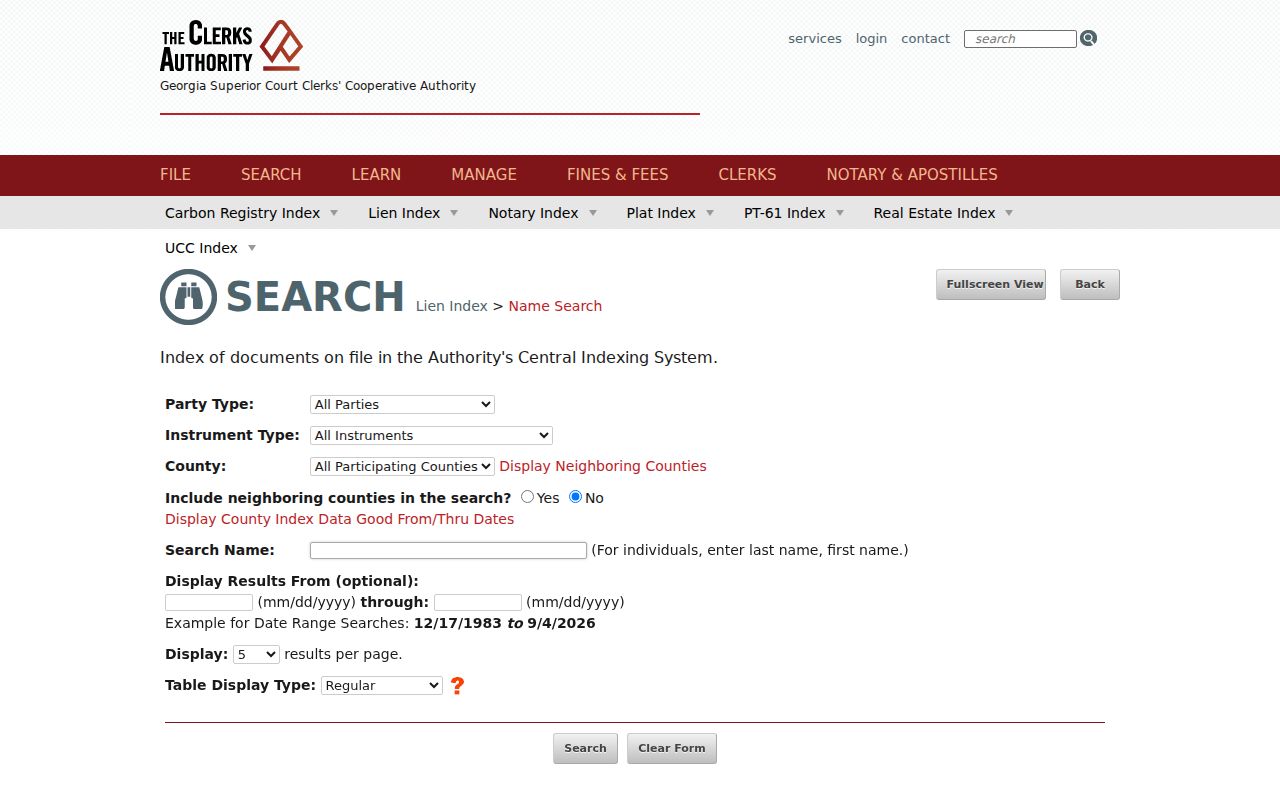
Read the lien itself, then its release or cancellation, before trusting the index result.
Continue White County Deed Research Beyond the Web
No statewide system promises a complete online run of White County deed images. For gaps, ask the Clerk. Staff can check deed books from a name, an approximate date, and any known citation. The Georgia Archives county records collection and its research help backstop older deed and tax microfilm. FamilySearch's White County probate catalog covers 1858 through 1948. Estate files there may explain transfers tied to probate.
The historic courthouse dates from 1859 to 1862. The White County Historical Society runs a research room inside it. Local history yields name variants and context. It is no substitute for a recorded instrument. Cite the repository, record series, volume, page, film or image number, and access date every time.
Note: not every historical White County deed-book image is online, so confirm any missing text with the Clerk or the Georgia Archives.
Watch White County Names with FANS
The statewide GSCCCA FANS service can alert a registrant when a chosen name appears in recording activity. Treat it as an early-warning aid rather than anything more. It does not block a deed from being recorded. It also does not prove fraud occurred. Use it to notice activity, then confirm details in the deed records.
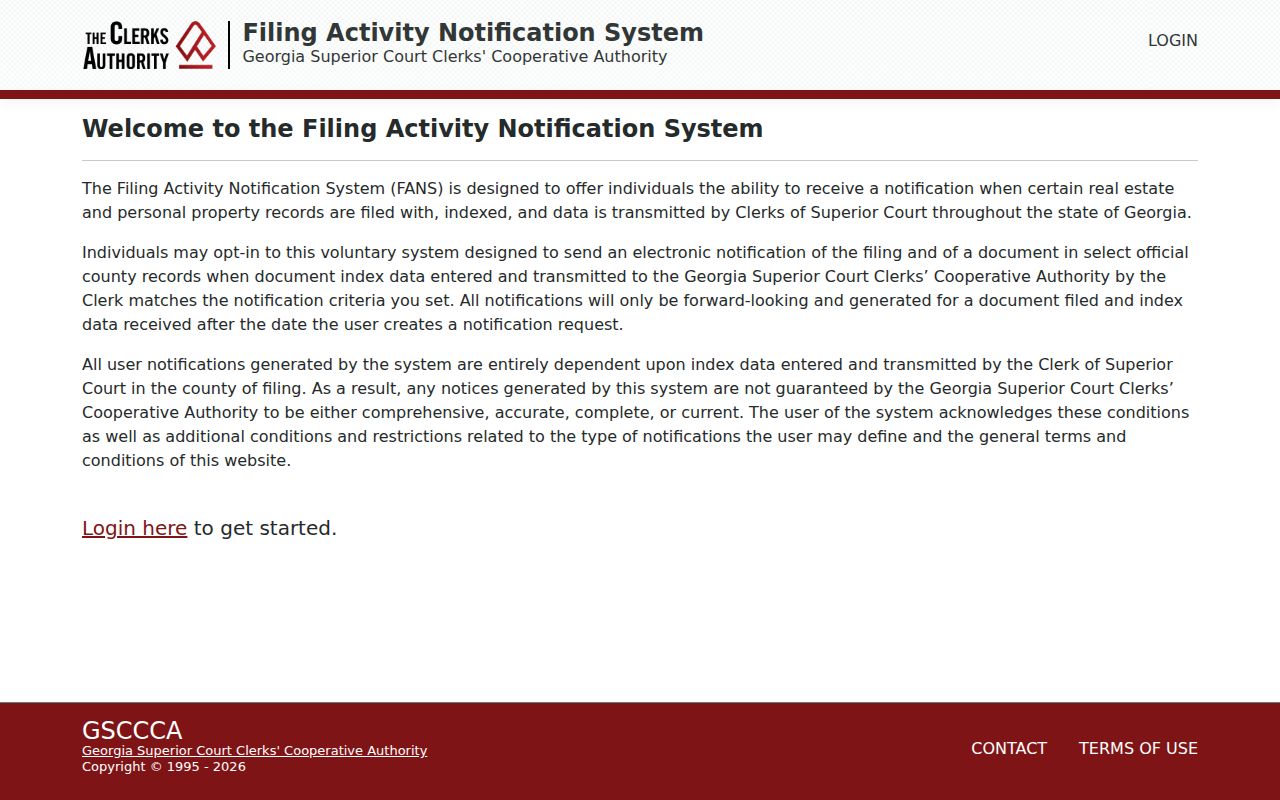
An alert is only a starting point. Pull the actual instrument behind it, check the details yourself, and bring questions to the White County Clerk or a qualified Georgia professional.
Distinguish a Recorded Deed from a Complete Title Review
Recording a deed in White County gives public notice, nothing more. An index hit proves the document was filed with the Clerk. It does not prove the signer held every interest that document describes. A full review may reach back to earlier deeds, estate proceedings, divorce decrees, tax deeds, easements, restrictive covenants, plats, security deeds, lien releases, and filings indexed under a name variant. A simple party search can miss real interests.
Use the parcel card as a cross-check, not a verdict. The Assessor traces ownership from deeds for tax purposes. The tax roll does not refresh on a fixed schedule after each recording. A brand-new deed can outrun the roll by weeks. The roll, in turn, is far easier to search by address. Each source has its own job.
Estates need extra care. When one appears in the chain of title, get the Probate Court order, the appointment, or whatever authority shows who could lawfully act. Then find the recorded conveyance that followed. When a business or other entity is a party, the Georgia Secretary of State business search can confirm its filed name and standing. That record still cannot prove title or signing power. Court judgments and quiet-title orders likewise have to be tied back to the land. Use the case, the legal description, and any later recording for that.
Keep a worksheet as you go. Record the exact party spelling and each party's role. Add the instrument type, the execution and recording dates, and the book/page or instrument number. Include the legal description, the prior-deed reference, the image source, and any gap that still needs a counter search. For an active purchase, sale, inheritance, boundary dispute, or suspected title defect, hand those citations to a qualified Georgia attorney or title professional. They can weigh legal effect, not just locate public documents.