
Inside White County Tax Records
Tax records in White County are a joined trail, not a single document. The White County Assessor sets fair market value and keeps the parcel roll. The Tax Commissioner then receives the digest, issues bills, takes payments, and pursues delinquent accounts. A solid lookup holds the year and parcel number steady while you move between the two offices.
| Field | What It Shows | Where |
|---|---|---|
| Fair market value | Assessor's estimate of full value | Property record card |
| Assessed value | Georgia's taxable assessment base, generally 40% of fair market value | Assessment roll |
| Exemptions | Approved reductions such as homestead or conservation use | Assessor record |
| Bill and status | Tax due, payment, delinquency, and balance | Tax Commissioner |
| Recorded sale | A past transaction amount, not the current tax value | Parcel card and deed |
State property valuation rules separate fair market value from assessed value, and exemptions can lower taxable value further. A sale price reflects one transaction. It does not become the next bill's value on its own. Read every figure with its label and tax year.
White County Card Search
The county's Property Record Card Search is the official entrance to its qPublic application. County text notes that the display reflects the last certified tax roll. That suits a year-specific tax search well. It cannot prove a recent sale has reached the live roll yet.
The qPublic application may present a web-security challenge before it opens. Work only with the fields visible in the live application. Keep a parcel or tax-map number handy. The portal may not load at times. If so, contact the Assessor directly rather than following instructions built for another county's setup.
The official county launch page displays the local entry point along with the roll disclaimer.
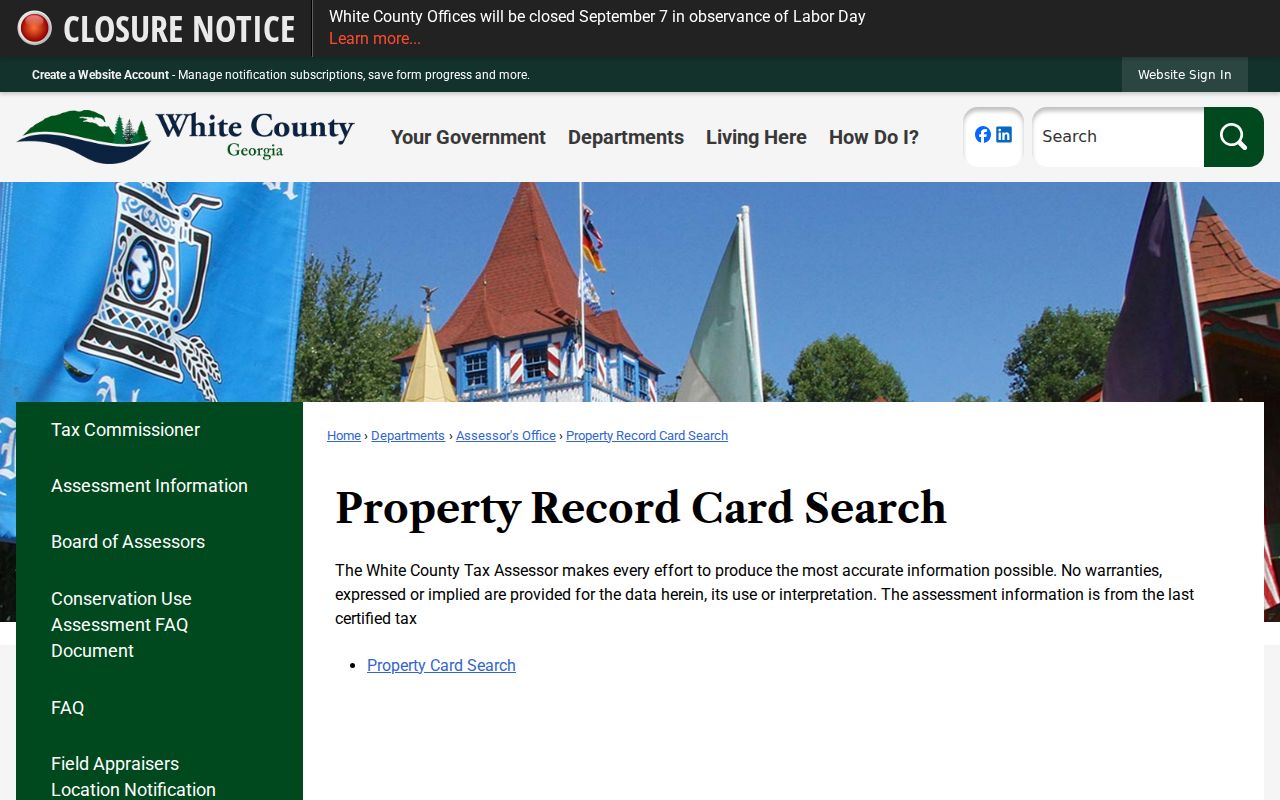
The page shown is where White County sends users who need a property card. The county's own language governs how current any displayed assessment should be read.
Trace a White County Tax Bill
Begin with the parcel card, then carry the same parcel number and tax year to the Tax Commissioner when you ask for the bill. Matching on the parcel, not the owner's name, avoids mix-ups caused by similar names or a mailing address that differs from the property's situs address.
The Tax Commissioner handles collection. Value and exemption questions belong to the Assessor instead.
- Find the address in the property-card search and copy the parcel or tax-map identifier.
- Match the owner, situs address, fair market value, assessed value, and tax year.
- Ask the Tax Commissioner for the bill and payment status tied to that parcel and year.
- Return to the Assessor record to verify every exemption used in the calculation.
- If the account is delinquent, check its lien, levy, advertisement, and sale stage.
- Assessed value
- The statutory share of fair market value used as a starting point for tax.
- Mill rate or levy
- The rate applied by taxing authorities to the taxable assessment.
- Homestead exemption
- An approved reduction associated with a qualifying owner-occupied home.
- Tax lien
- A legal claim arising from unpaid property tax.
White County's payment information page lists the county's approved payment channels. It also states plainly that tax payments are not taken by phone. Card payments made online carry a convenience fee. That fee goes to the processor rather than the county.
Know the exact account before sending money. That way a receipt or payoff figure matches the right parcel and tax year.
White County Digest by Year
White County posts its digest archive on the Tax Digest and 5-Year History page. Downloads there span 2016 through 2026. A digest is a snapshot of property, value, and tax data for one tax year. That makes it a strong tool for historical questions. Need the value a parcel carried in a past year? The digest answers it. It also shows whether a later roll recorded a change. For history, the digest beats a current parcel card alone. The county's digest archive lists each annual file. Each file is free to open.
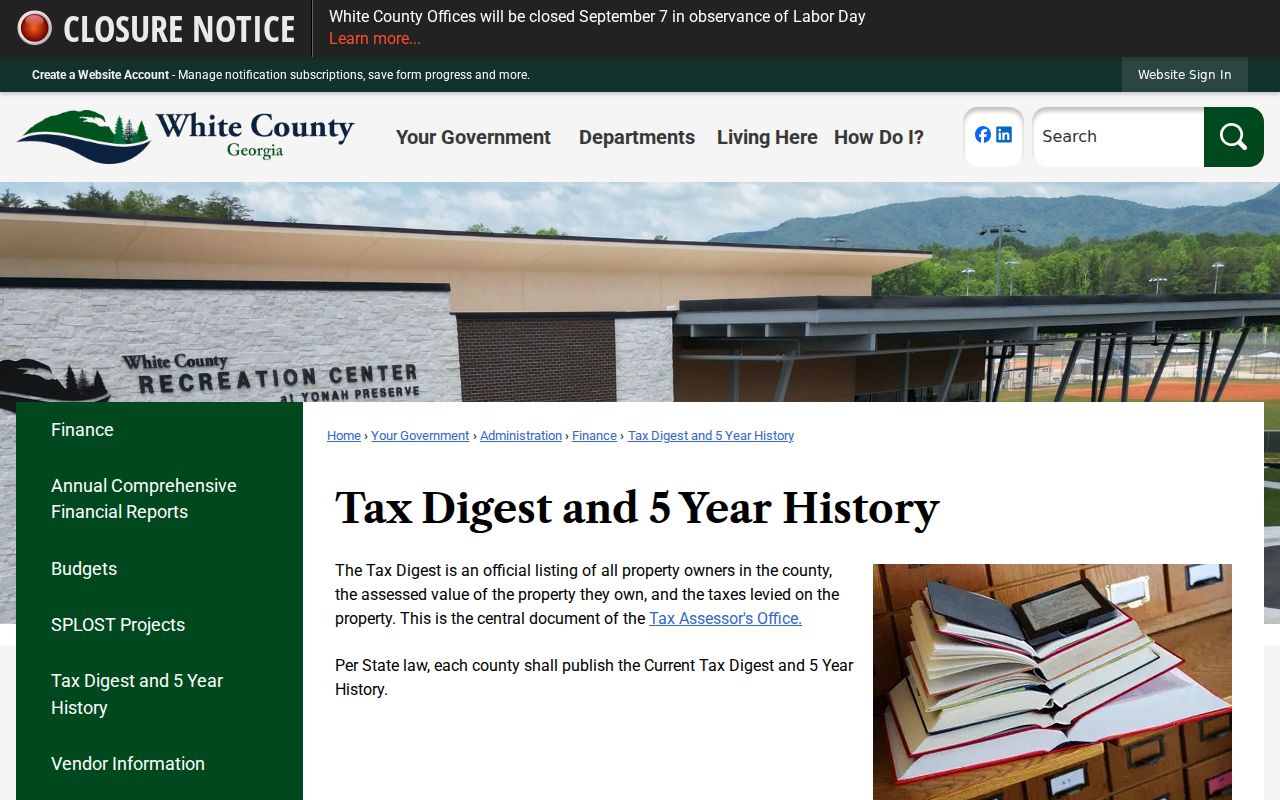
With every year listed back through 2016, the archive serves past-assessment work better than a single current card ever could.
White County Tax Exemptions
Homestead, conservation-use, Freeport, and other property-tax programs fall to the Assessor. The county's Tax Exemptions page describes each one. Every program carries its own eligibility rules and filing proof. An exemption may appear on one parcel or one year. It should never be assumed for another. For 2026, White County sets January through April 1 as the annual-return period. That is also the current window for homestead and conservation-use matters. The Resources and Forms page carries the county forms. Timing shifts, so read the current Assessor notice before filing in any later year.
Can an exemption change the fair market value? Usually not. An exemption trims the taxable value. The assessor's fair market estimate stands on its own. Compare both fields to understand what the bill is really doing.
Contest a White County Assessment
After the annual assessment notice arrives, an owner can appeal the value, taxability, uniformity, or exemption treatment. White County handles these matters through the Assessor. Unresolved cases move on to the Board of Equalization. Strong evidence helps: the notice itself, parcel-card facts, photographs, a survey where dimensions matter, and sales that are truly comparable.
The clock matters here. Georgia allows 45 days from the notice date to file. That date, not a calendar reminder, controls the count. Keep proof of timely delivery. State the parcel, tax year, grounds, and requested correction in plain terms.
Appeal window. File within 45 days of the assessment notice date. Confirm the current form and delivery method with the White County Assessor.
Delinquent White County Taxes
Unpaid tax travels its own enforcement path. White County treats taxes as delinquent after November 15. A lien and levy process can follow, with the parcel advertised for four straight weeks before a first-Tuesday sale. Exact account status beats any general list, so confirm it with the Tax Commissioner. The county's delinquent-tax explanation lays out the advertisement, tax-sale, redemption, and deed sequence.
The official sequence separates a late bill from a parcel already advertised or sold. A purchaser gets a tax deed subject to a one-year redemption period and other title issues. A tax sale is no shortcut to clean title.
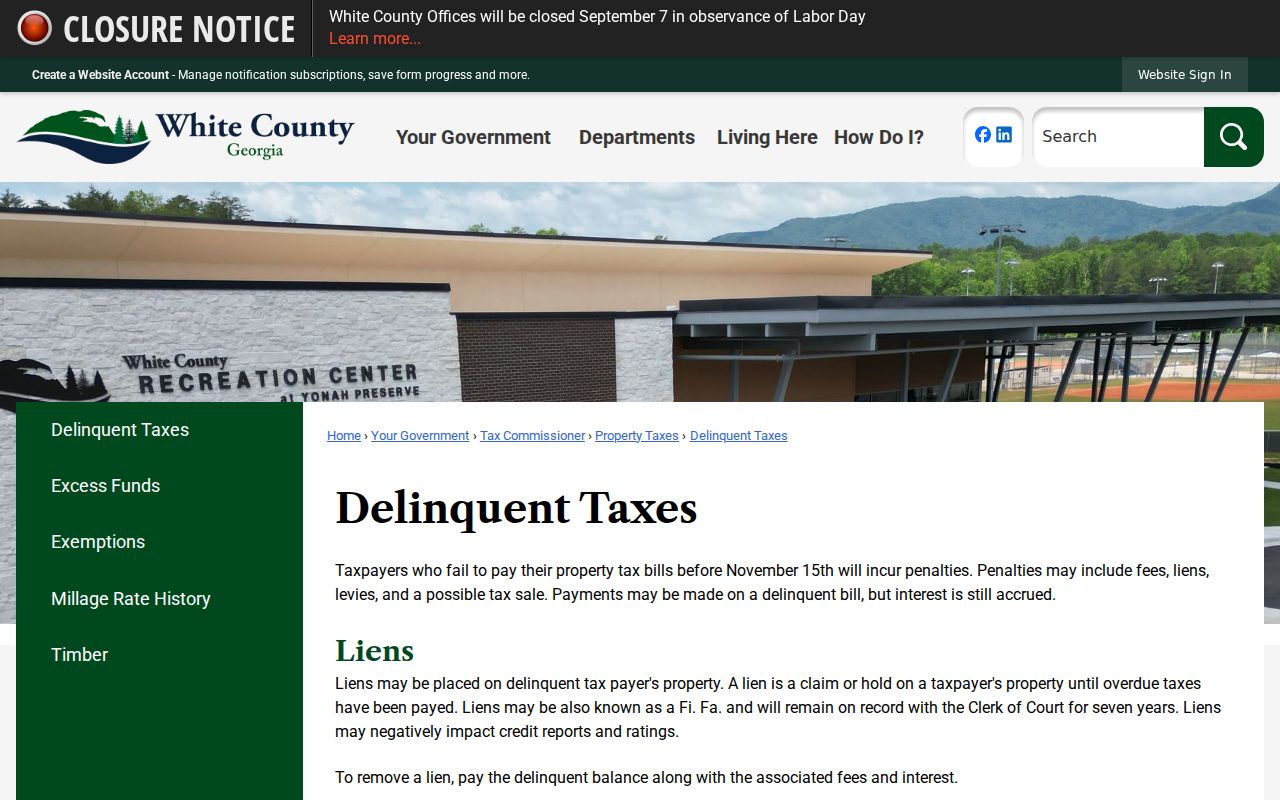
The official sequence separates a late bill from a parcel already advertised or sold. A purchaser gets a tax deed subject to a one-year redemption period and other title issues. A tax sale is no shortcut to clean title.
Excess Funds After Tax Sale
A White County tax sale can bring in more than the taxes and costs owed. When that happens, the county holds the surplus as excess funds. The Excess Funds page lists who may qualify and explains the written claim process. Mere appearance on a list proves nothing. A claimant must still show priority and a legal interest in the property records.
Claimants range widely. The record owner at the time of sale may qualify. So may others holding a valid interest. Liens and transfers can shift priority. Keep the tax-sale documents, deed references, and any correspondence. A contested claim may call for independent legal advice.
Scam-Proof a Tax Check
White County issued a warning on August 12, 2024. Callers had posed as law enforcement, debt collectors, or banks. The scammers demanded cryptocurrency for fake warrants or citations. The county fraud alert posts the Sheriff's official number, 706-865-5177. Check any tax balance with the Tax Commissioner instead of following a caller's payment instructions.
Official property tax records leave an account trail you can verify yourself. Sudden urgency is one warning sign. A cryptocurrency demand is another. Refusal to name the parcel and tax year is a third. Hang up and dial the published office number.
Note: A parcel card, tax bill, and recorded deed each answer a different question; none alone is a title opinion.
Reconcile White County Tax Years
Always name the tax year. A current parcel card may carry a later appraisal than the bill you are examining, while the digest preserves the certified snapshot for an earlier cycle. Compare one parcel identifier across the card, digest, assessment notice, and Tax Commissioner account. Splits and merges matter too. Document both the former and current parcel numbers whenever the boundary changed.
Ownership also shifts year by year. The digest owner is a tax entry for one year, not conclusive title. A deed recorded after the digest was prepared can explain why the bill and the current tax roll name different parties. Use the White County deed search to confirm that transfer instead of forcing one record to match another.
Building changes can alter appraisal facts on a different schedule. The Assessor reviews every parcel physically at least once every three years. That is a review cycle, not a promise of a three-year valuation freeze, and it says nothing about how fast deed updates post. Ask which tax year and inspection date support the value in question.
For an appeal or a purchase review, gather the assessment notice, parcel card, digest row, tax bill, exemption decision, and any recorded sale instrument. Label each copy with its source and date. That modest record set from the property records makes value changes easy to explain. It also keeps a paid tax bill from being mistaken for agreement with the appraisal.
Send questions to the office that owns the field. The Assessor handles classification, appraisal facts, returns, exemptions, and notices. The Tax Commissioner handles billing, payment, delinquency, levy, sale, and excess funds. The Clerk can pull a deed, tax lien, cancellation, or tax deed by recording reference. Routing one parcel number to the right custodian beats asking a counter to interpret another office's record.
Keep each response with the parcel number, tax year, office name, and access date. Later changes then stay clear and reproducible.